
What Does Medical Device Classification Mean: Risk Classification and Performance Comparison
Is a Class 4 medical device better? This article examines the meaning of classifications indicated by domestic medical device grades, and explains how to differentiate grades and performance in the product comparison table.
1. Grade Does Not Indicate Performance Ranking
There are cases where the ‘Class 2’ and ‘Class 4’ indicated in the product comparison table are interpreted as performance superiority.
However, medical device classifications do not represent scores for precision or durability of products.
Misunderstanding the meaning of classifications may lead to comparing products with different intended uses as if they have a single ranking.
According to Article 3 of the Medical Device Act, classifications should be made based on differences in intended use and potential risks to humans during use.
Grades serve as information to understand the safety management classification applicable to the device.
To compare measurement accuracy or ease of use, the individual assessment results of each item must be examined separately.
This article covers the basic concepts of reading domestic medical device classifications.
It does not cover separate regulatory classification procedures applicable to in vitro diagnostic medical devices and digital medical products, overseas classification correspondence tables, or specific product classification determinations.
The comparison methods below are practical suggestions from MedQraft and are not legal forms or additional obligations.
2. Distinction Between Classification Information and Performance Information
Classification information indicates the management category the device belongs to, while performance information represents results from functioning under specific conditions.
To reduce the chance of grades being read as performance scores, both types of information should be separately recorded in the product comparison table.
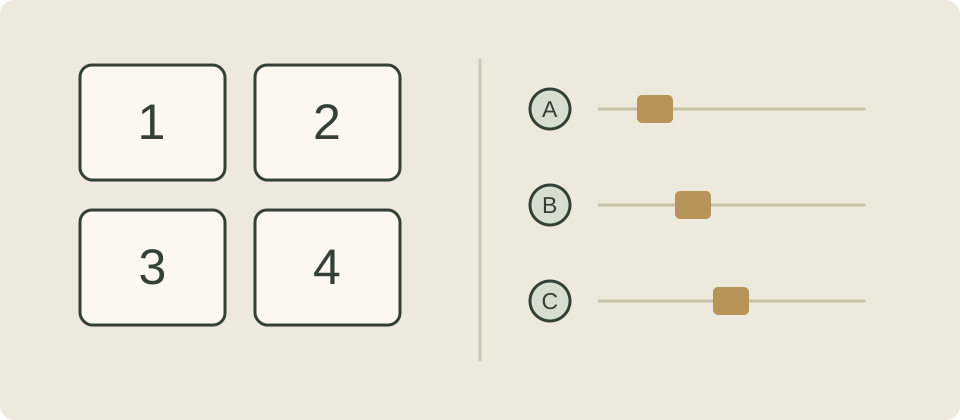 Grades are recorded for management classification, while performance is noted for evaluation items.
Performance differences are explained by the evaluation results of the relevant items.
| Category | Question to Answer | Information to Include in Comparison Table |
|---|---|---|
| Grade/Item | What category of medical device is it managed under? | Applicable country, item name, official classification information |
| Intended Use | What is the product used for? | Target audience and purpose, permitted use scope |
| Performance | At what level does it perform the desired function? | Evaluation items, units, testing conditions, results |
| Usage Conditions | What constraints exist in actual environments? | Installation and operational conditions, compatibility, etc. |
For example, the value ‘Class 3’ is not a unit indicating accuracy.
To compare specific measurement functions, one must read the evaluation materials for that function.
Conversely, performance numbers cannot arbitrarily be lowered or increased based on perceived performance superiority.
3. Comparison Scope Varies by Intended Use
Even products with similar functions have different comparisons depending on their intended use.
For instance, the description of ‘measurement function’ does not reveal the target of measurement, the applicable environment, or the purpose of using the results.
After confirming these conditions, defining common evaluation items will clarify the meaning of comparison results.
 The target, time, and environment here are questions necessary for defining the comparison scope between products.
The three icons alone do not constitute a formula for calculating grades.
For each product, the item and grade must be verified against the relevant notices.
The Ministry of Food and Drug Safety’s “Regulations on Medical Device Items and Grade by Item” may create new items, or change definitions and grades, so it is appropriate not to transfer numbers listed in older materials directly to current products.
Ministry of Food and Drug Safety Notice No. 2026-18 Amendment
4. Hypothetical Example: Composition of Product Comparison Table
The following is a hypothetical example not referring to actual products.
The planning team looks at the grade numbers from two products and intends to label the one with the larger number as the ‘higher product.’
They have not yet confirmed if both products serve the same purpose.
In this comparison table, the column labeled ‘Product Level’ is revised to ‘Domestic Classification Information,’ and the intended use and performance items are separated into different columns.
Rather than using general assessments like ‘good/average’ in the performance column, actual comparison items and results are provided.
If there is a product with measurement functionality, accuracy or repeatability may be evaluation items, but applying these items universally to all medical devices is not correct.
| Original Expression of Meeting Draft | Revised Expression | Reason for Revision |
|---|---|---|
| The product with the larger number is the superior product. | Grades are recorded as classification information. | To prevent changing classification numbers into quality rankings. |
| Both products have measurement functions. | List measurement targets and intended uses side by side. | To define the scope of comparability. |
| Which product performs better? | What results were achieved under the same items, units, and conditions? | To clarify what assertion of superiority is being made. |
It is more reasonable to explain what requirements are suitable for each product for different intended uses.
Even for products with the same intended use, if the testing conditions or units differ, direct comparison of result values can be difficult.
These differences should be evident in the comparison table.
5. Conditions Required for Itemized Performance Comparisons
When comparing performances, definitions of evaluation items, units, and measurement conditions must be presented together.
When comparing speeds, it must be clear what action’s duration is being measured; when comparing accuracy, it must indicate what baseline value is being contrasted.
This information allows readers to interpret the results in accordance with their own usage conditions.
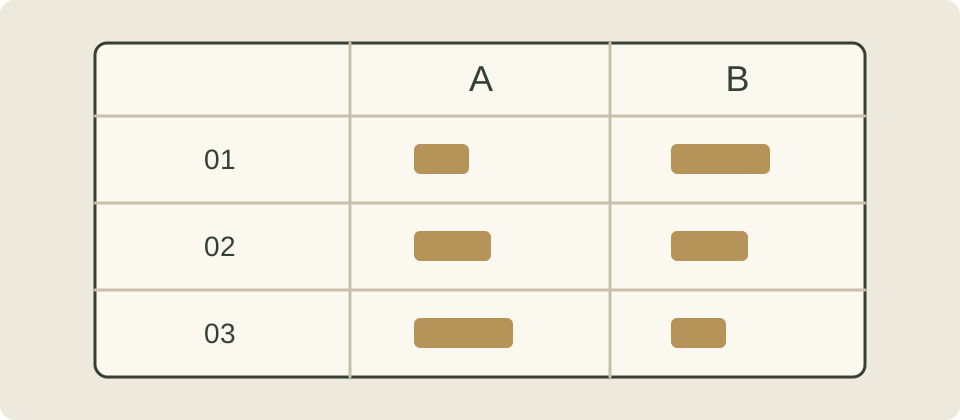 Even when comparing Products A and B based on the same evaluation items, the basis for selection can differ depending on the required functionality and usage conditions.
The illustration shows the arrangement of the comparison table and does not display scores or actual measurements.
When drafting a comparison table, it may also be useful to leave a line explaining the reason for selecting those items.
For example, if repeated use is key to the purpose, it’s not sufficient to conclude based on a single result,it is necessary to discuss what evaluations are required for that usage condition.
Specific testing methods and pass criteria should be determined for each product, so common figures are not provided here.
6. Interpretations to Avoid in Technical Descriptions
When describing grades, applicable countries and classification systems must be specified.
Since systems vary by country, the same number should not be interpreted as the same grade on that basis.
Claims regarding performance should also correspond with the evaluation items and justifications, and reasons for product selection should be explained in relation to the actual intended use.
Instead of saying, ‘A Class 4 device is more accurate,’ one could state, ‘The accuracy for that function is confirmed in this evaluation material,’ linking the basis of judgment to that item.
This is not a guideline for uniformly assessing the legality of advertising phrases but rather a suggestion on how to write sentences to communicate technical content clearly.
Furthermore, interpreting a high grade as indicative of many defects or a low grade as suggesting no management required is also inappropriate.
The meaning of the classification should not be misconstrued as quality defect rates or the likelihood of individual users encountering harm.
7. Review Items for the Comparison Table
- Does the title of the column displaying grades imply quality ranking?
- Are the compared products included under the same purpose and usage scope?
- Can performance evaluation items and units be confirmed for each row of performance comparison?
- Are readers aware if the comparisons were made under the same conditions or if the comparison scopes differ?
- Are domestic classification information and the same numbers from overseas being mixed?
The purpose of comparison tables is to explain the differences between products for necessary uses.
Grades should be accurately recorded as classification information, and the foundations for choice should be presented based on the evaluation results of the relevant functions.
8. References and Related Articles
- National Law Information Center, Article 3 of the Medical Device Act: Legal basis for classification of grades based on intended use and potential risks.
Check the relevant clauses from the version effective July 1, 2026.
- Ministry of Food and Drug Safety, Partial Amendment Notice No. 2026-18 on Medical Device Items and Grade by Item: Confirm contents on new item creation, grade changes, and definition modifications in the revision notice dated March 9, 2026.
This article does not determine the grades of individual products.
- Ministry of Food and Drug Safety, Digital Medical Products Information: Confirm the scope where separate regulations and classification rules are provided.
The general comparison examples in this text are not applicable to the grade determination procedures of digital medical products.
Confirmation Date: October 3, 2026.
The legal classification principles and MedQraft's comparison table drafting suggestions have been separated.
The illustrations and hypothetical dialogues were self-produced and do not represent actual product performance results or the company's test performance records.
Further Reading: Domestic Regulatory Review Before Product Definition, Comparison Conditions for Performance Test Results
Let's talk
Apply what you have read
to your product.
Tell us your product's current stage and the questions you need to review.
Discuss your questions ↗