
After Evacuation, Who Checks Who Came Out?
This is an emergency evacuation preparation question to consider in workplaces where employees and visitors differ.
It examines personnel verification, absence of responsible individuals, and reporting systems through hypothetical cases.
Exit Guidance: There are More Checks to Follow
The first thing to check in the workplace evacuation guide is the evacuation route.
However, during a planning review meeting, if you ask, "Who checks who came out?", the answer may not be immediate.
The tasks of guiding the route and compiling the confirmation results must be connected.
There may be different personnel present on holidays or on days when shifts change.
There are those on vacation, those working offsite, and visitors for deliveries or equipment inspections.
Simply recalling the regular employee list when explaining the plan can lead to discrepancies regarding who actually needs to be verified.
This article serves as self-assessment questions for businesses, including medical device companies, for regular plan reviews.
It is not a manual for actions to be used during an ongoing incident or for evacuation and rescue procedures.
In actual emergency situations, the official response systems and field command of the business must be followed.
 This diagram symbolizes the relationship between individuals present on-site and the records to be verified.
The gold-colored figures signify that we should also consider individuals beyond the usual employee list, such as visitors.
Defining the Scope of Reference Materials
U.S. OSHA's publicly available educational materials cover post-evacuation personnel verification, relaying information about unverified individuals to supervisors, and ways to verify non-employees like suppliers and customers.
This article references those perspectives on personnel verification.
OSHA eTool: Evacuation Elements, Accounting for Employees After an Evacuation
This material pertains to the context of workplace emergency responses in the U.S. It does not directly translate into legal obligations for domestic businesses or standard procedures for all workplaces.
Requirements based on domestic regulations, the building's purpose, substances, processes, and the number of permanent employees should be confirmed separately.
This article does not establish new evacuation sites or equipment shutdown methods or designate rescue roles.
The table below and the hypothetical situations are not reproductions of the original format but are examples created by MedQraft for review purposes.
This does not imply that dealing with environmental and safety information solidifies the company's scope of environmental and safety consulting services.
Asking How to Identify "Today’s Personnel"
During regular reviews, we can initially observe how the personnel changes occur.
Instead of stopping at the answer that says a personnel list is maintained, request explanations on how vacations, offsite work, shifts, and onsite visits are reflected.
This question does not mean that new personal information must be collected.
It is a way to review alongside the safety and privacy officers the existing access and visit management of the business and the necessary information range.
We can also review processing methods to ensure unnecessary personal information is not exposed on public bulletin boards or group chat rooms.
| Regular Review Targets | Questions to Ask in Meetings | Confirm Operational Relationships |
|---|---|---|
| Employees | Where are changes for vacations, offsite work, or shifts reflected? | Connection between work information and understanding on-site personnel |
| Visitors | Who tracks the visits and their conclusion? | Connection between reception personnel and site guidance |
| External Workers | Who is informed of the presence of inspection personnel? | Connection between external work management and emergency response personnel |
| Person in Charge of Verification | How is the role continued in the absence of the primary individual? | Connection between alternate roles and guidance/training |
This table does not represent specifications for personnel management systems.
Each workplace operates differently, so the goal is to explain how it is used in practice and identify where explanations fall short.
Understanding Names and Roles of Responsible Individuals Together
The fact that names of responsible persons are written in the plans and that they can explain their roles are two different matters.
Regularly, you can ask who checks what at the designated assembly point and where the results are to be communicated.
This article does not call for setting a new assembly point.
The same methodology applies while considering situations when the primary individual is on vacation.
Even if alternate roles are designated, if the individuals have not been informed, operational gaps may remain.
Conversely, if individuals already know their roles, it is better to check whether the system maintains itself under actual conditions rather than creating unnecessary new forms.
In cases where multiple companies use the same building, questions may remain about whether the explanations from your company and those from the building management entity do not conflict.
No arbitrary command structures or reporting procedures are added without onsite information.
Hypothetical Case: If There Are Visitors but the Verification Role is Vacant
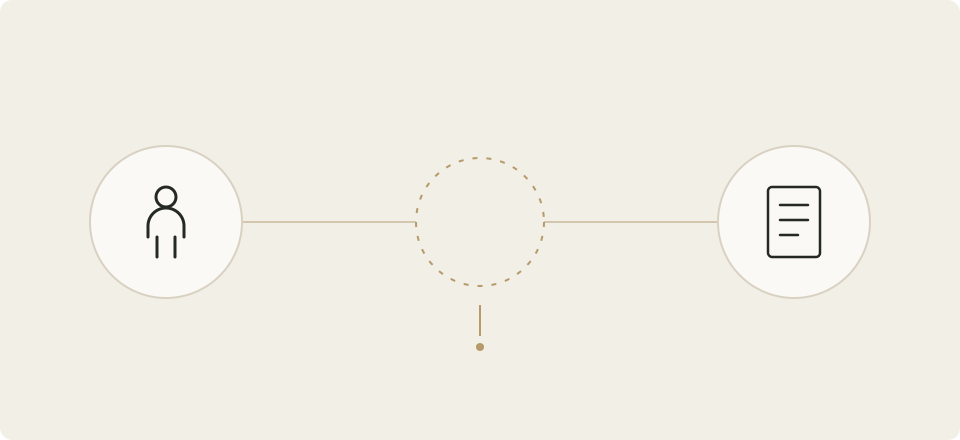 The empty dotted circle in the hypothetical case represents an undefined role.
This is not a diagram of actual evacuation routes or action sequences.
Below is a hypothetical planning review scenario rather than an actual customer case.
At a small workplace, the designated individual for confirming employee numbers is set, but it is not explained who shares the visit of external inspection personnel.
The primary individual plans to take leave the day before a holiday.
Instead of closing the meeting with an ad hoc, "Someone nearby can check," it is essential to confirm what relationships are empty within existing plans and visit management methods.
The memo below illustrates how to summarize that review.
| Items Found | Answers That Are Easily Rushed | Tasks to Verify in Advance |
|---|---|---|
| Visitors are present, but verification roles are unclear | The receiving person will handle it | Confirm defined roles and information delivery methods with the safety personnel |
| Primary individual is scheduled for leave | Other staff have read the plan | Confirm whether alternate roles have been specified and communicated |
| Method for reflecting personnel on the list is unclear | There is a complete employee list | Review operational methods for identifying actual present individuals |
| Explanations vary between departments | Redistribute training materials | Confirm the source of the differing explanations and cross-check with established procedures |
This table is not a sequence of execution in case of an incident.
It is a compilation of questions to bring to planning personnel during regular meetings.
It does not suggest that general employees should be tasked with re-entry or search duties to find a single visitor.
Do Not Change Unknowns to “Confirmation Completed”
In training or planning reviews, it is useful to lay bare areas where information is lacking.
Distinguish between assumptions like "I can ask the person in charge" and the actual content explained by the designated individual.
If questions remain unresolved, note what further explanations or discussions are needed.
The purpose of meeting notes is not merely to check boxes.
It is to illuminate whose roles are uncertain, what information is not being conveyed, and what plans need corroboration.
Adding names without verifying operational methods does not exaggerate the scope of resolution.
In actual emergency situations, it is essential not to arbitrarily re-enter buildings or manipulate systems if there are unaccounted individuals.
This article does not provide procedures for rescue, firefighting, or halting hazardous processes.
It must comply with site-specific response plans and trained roles, including field command.
Reviewing Understandings from Planned Training/Education
After distributing documents, there may be a need to verify what the individuals assigned those roles have understood.
In regular explanations or in training planned by the business, questions like, "Where should results be communicated, and to whom?" can be used to have individuals explain the existing plans.
This article does not propose unannounced drills or arbitrary equipment shutdowns.
The scope and methods of actual training should be determined by the safety personnel and management entities relevant to site conditions.
We do not specify the number of training sessions, time limitations, or passing criteria here.
When summarizing review results, differentiate between observed facts, areas needing correction, and the responsible individuals for follow-up.
For example, stating "Heard that the visitor's responsibility was not defined" is a different record than "Employees showed indifference to safety."
It can be more beneficial to specifically detail operational relationships to be examined over speculating about individuals.
Questions to Bring to the Next Meeting
- How do we identify differences between the individuals present today and the usual employee list?
- How are visitors and external workers considered in the existing plans?
- Is the individual in charge aware of their role when the primary responsible person is absent?
- Can the established assembly point and result communication system be explained?
- Who will be consulted to reflect unverified content into the plans?
- How will understanding be assessed after notifying about changes?
To explore more about preparations that reduce workplace hazards, you can read Methods to Address Hazards Before Protective Equipment.
The usual accessibility of chemical material information is separately addressed in How to Check SDS at the Work Location.
References include the publicly available OSHA eTool linked above, with a verification date of September 23, 2026.
This is not intended to replace notices about new regulations or domestic legal inspection checklists; it is a self-created regular review question referencing official materials.
Let's talk
Apply what you have read
to your product.
Tell us your product's current stage and the questions you need to review.
Discuss your questions ↗