
Same Collagen, Same Material? Reviewing the Source and Evidence for Animal-Derived Materials
Even if the ingredient names from two suppliers are the same, there are materials to verify.
This article examines how to read the sources, processes, and product application grounds through a hypothetical comparison of collagen ingredients.
1. Starting with Two Ingredients with the Same Name
The development team evaluates a new supplier for collagen ingredients.
Both the existing ingredient and the candidate ingredient are labeled ‘collagen,’ and they appear similar.
The purchasing manager asks about the substitutability, and the development manager aims to determine if it can be used for a small evaluation.
At this point, it is difficult to proceed to the next judgment by comparing only one field of the ingredient name.
The fact that the ingredient names are the same and the judgment that there are sufficient grounds for application to our product must be separated.
It is good to lay out what information has been received and how much can be learned from that information.
We do not assume that empty parts of the material are the same as the existing ingredient.
This article serves as a preparatory guide for the development, quality, and regulatory affairs personnel of medical devices using animal-derived materials.
The following ingredients A and B, comparison table, and meeting notes are all fictional case studies created by MedQraft.
They are not based on actual customer data or specific suppliers' data.
This is not an explanation of the collection and distribution procedures of human donor tissues.
 Even with the same ingredient names, we separately compare the sources and the scope of the materials applied.
2. Scope to Confirm from Official Materials
The 2019 Guidance on Animal-Derived Materials from the FDA addresses the animal species, tissue, source and handling information, manufacturing control, and evidence for pathogen removal/inactivation.
It is recommended to examine the relevance of test conditions to actual manufacturing processes in virus evaluations.
The distinction that viral inactivation results cannot be read directly as evidence for prion removal/inactivation is also presented.
FDA Original Document, III and IV.A~C
This material is non-binding guidance from the United States and does not apply to human-derived tissues and in vitro diagnostic devices.
The comparison method below is not a transfer of the mandatory forms of the guidance but is a self-suggestion for practitioners to organize materials.
It is not used as a common test list for domestic approval procedures or specific products.
Additionally, the past QSR clauses of the 2019 document are not cited as current provisions.
As the U.S. Quality System Regulation came into effect on February 2, 2026, when confirming current obligations, the latest regulations and requirements applicable to the product must be cross-reference distinctly.
3. Virtual Comparison: Do Not Fill ‘Not Specified’ as ‘Same’
Let’s assume we received descriptive materials for existing ingredient A and candidate ingredient B.
The table below does not represent actual test results or safety assessments.
It is an example of distinguishing what can be stated from limited materials and what needs further confirmation.
| Comparison Item | Existing Ingredient A's Data | Candidate Ingredient B's Data | Current Memorandum |
|---|---|---|---|
| Ingredient Name | Collagen | Collagen | Only confirmed the fact that the names are the same |
| Origin Information | Cow-derived, skin tissue specified | Cow-derived only mentioned | Request for additional tissue information from B |
| Document Application Target | Item code and revision identifiable | General introduction material of the product group | Confirm if B's data pertains to the respective item |
| Process Description | Confirmed location of reviewed process data | Detailed data not received | Do not state it as the same process |
| Our Product Application Review | Confirmed location of existing review records | Not reviewed yet | Assessment of suitability for use is pending |
From this table, we cannot conclude that B is riskier than A.
The information confirmed is simply different.
Conversely, we cannot conclude that the name and animal species being the same is sufficient either.
It is crucial to accurately note the state of necessary information not yet secured.
Even when receiving a single document, try to differentiate between ‘receipt completed’ and ‘content confirmation completed.’
If the person in charge received the file but it lacks the item code, the receipt of material is complete, but the review of the application scope remains.
By attaching dates and document revisions to the table, it also becomes easy to compare what has changed when further materials arrive later.
4. Placing Source, Process, and Our Product Together
Even if the material review is divided among individuals, in the final discussion, they must be looking at the same ingredient.
If the purchasing manager uses the supplier's product name, the development person uses the internal sample name, and the quality manager uses different item codes, even with sufficient materials, they can end up discussing different subjects.
First, link the internal names used to identify the supplier’s item, and then I suggest organizing the materials into the three bundles below:
- Source materials: These are materials explaining what the candidate ingredient is.
Questions left to confirm with the supplier should not be supplemented with inferred content not found in the explanatory materials.
- Process materials: Indicate which ingredient the received report targets and which process it pertains to.
Distinguish the entire company introduction materials from the applicable grounds for the respective items.
- Product review materials: Write down how that ingredient is used in our product and how the received evidence connects to that judgment.
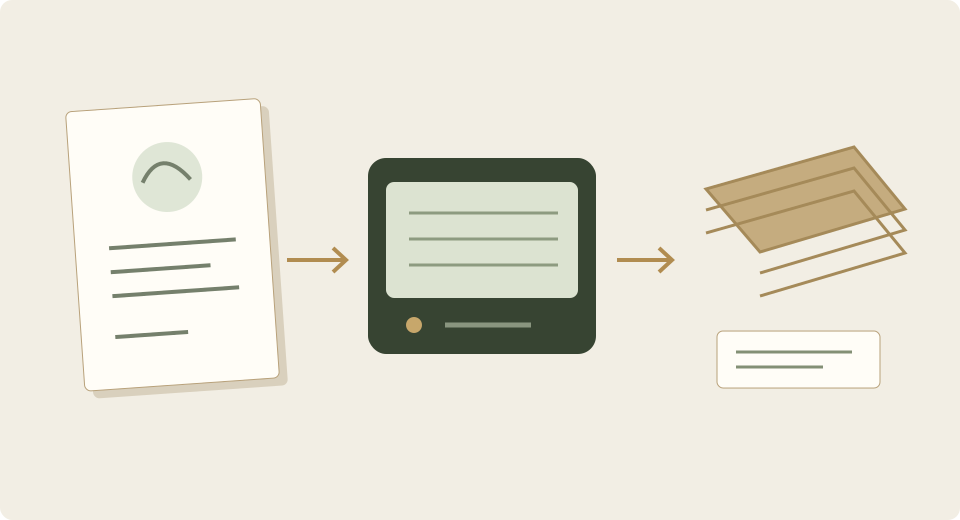 Connecting source and process materials to the conditions of use in our product reveals the scope for review.
Even if the development team examined B’s small sample and noted its appearance, such observational records alone do not close any unknown items regarding the source or process.
Conversely, having received source materials does not mean that the necessary performance for the product was confirmed either.
If you separate which questions the available materials answer, it reduces the task of marking that distinct reviews were completed all at once.
5. Reading the Subject and Conditions More Than the Report Title
When a supplier states that ‘sterilization is complete’, first ascertain which documents they rely upon for that assertion.
Examine the distinctions between sterilization materials and evidence for virus removal/inactivation and check if they apply to the specific ingredient and process.
Do not broaden interpretations by determining that other questions were resolved just by looking at the title.
The principles of related evaluations can be found in FDA Guidance IV.C.
In practical notes, it is more useful to first place ‘questions to confirm with this material’ rather than simply transcribing the report title.
For example, differentiate between “Is the subject of this report candidate ingredient B?” and “Does the condition of this report connect with the process described by the supplier?”.
If the connection cannot be confirmed, this means either there are no documents available or that while documents exist, the explanations are insufficient.
 Read the targeted conditions and scope for each document, and do not substitute for the answers to different questions with one document.
Even if it is difficult to receive detailed materials immediately due to confidentiality reasons, do not fill in the status as ‘review completed’.
The scope of discussion should include the supplier and the range of materials available, the manner of additional explanations, and the approach of the reviewing personnel.
Which materials to procure and how is a matter for the person in charge to evaluate, including contracts and regulatory pathways.
6. Write Down Actions for Next Steps in Review Meetings
The following notes are a fictional example organized after reading the data for ingredient B for the first time.
This is not a form for determining approval but a configuration to connect unidentified items to next actions.
| Status | Meeting Memo Example | Next Action |
|---|---|---|
| Confirmed Fact | The received materials state ‘cow-derived collagen’ | Document name, revision, pertinent item notation |
| Unconfirmed Information | Tissue information is absent from the materials | Request item-specific information from the supplier |
| Scope Confirmation Needed | The process-related file is common documentation for the product group | Confirm applicable parts and evidence for B |
| Separate Review | Application judgment concerning our product is not yet carried out | Connect with development, quality, and regulatory personnel for review |
Follow-up notes could include the person in charge and the reply confirmation due date.
However, rather than simply filling in the date, it is critical to clearly indicate what kind of responses are expected for review of the item.
Rather than “Request for materials”, try narrowing your question to “Request for tissue information applicable to B's respective item.”
When a response arrives, instead of deleting existing notes and leaving only the new conclusion, connect how the initially unconfirmed items changed with the information received.
If explanations remain vague, maintain the pending status.
It is better to manage information deficiencies, adverse judgments, review completions, and approval for use as distinct states.
7. A Self-Check with One Raw Material Today
Instead of changing the formats for all ingredients at once, choose one recently reviewed animal-derived raw material and check the following:
- Is the internal ingredient name connected to the supplier’s item identification?
- Can you distinguish between the facts written in the material and the assumptions made by the team?
- How does the target of the received report connect to our candidate ingredient?
- Is there a next action and a responsible person for each question still unanswered?
- Have you recorded each separately: receipt of materials, content review, and decision on product application?
This self-check does not substitute for the overall safety evaluations.
It is a starting point to locate which parts of the explanation are missing from the materials possessed by the team.
The core of this review is to not stop at confirming if the names are the same but to examine if there are grounds for applying the same judgment.
8. Related Articles and Reference Materials
- Medical Device Risk Management, What Should Remain After an Action and Evidence Chain: Further look into the connections between actions and foundations.
- Supplier Change Notification, What Records Should Remain After Receiving the Email: Discusses connections between change information and review tasks.
- Particle Size Analyzer and Rheometer: Two Instruments in Bio-Based Medical Device R&D: A different perspective on reading measurement results of materials.
Official basis confirmation date: September 29, 2026.
- FDA, Medical Devices Containing Materials Derived from Animal Sources (Except for In Vitro Diagnostic Devices), published March 15, 2019.
Referred to the scope of application and review items in III and IV.A~C.
This is non-binding guidance from the United States.
Confirmed the effective date of the current quality system regulations.
Figures and comparison tables have been directly created by MedQraft.
Necessary evaluations and the sufficiency of materials should be judged based on the intended use of the product, characteristics of the materials/process, and the target market, and this article does not present specific test conditions or uniform pass criteria.
Let's talk
Apply what you have read
to your product.
Tell us your product's current stage and the questions you need to review.
Discuss your questions ↗