
The Starting Point of Biological Evaluation: Contact Conditions of Skin Pads and Blood Pathways
This article compares virtual skin pads and blood pathway tubes using the same silicone, explaining how to connect contact surfaces, usage time, frequency of use, and final product conditions to a biological evaluation plan.
When preparing for biological evaluation, it is essential first to sort out the parts of the product that come into contact with the human body.
Even if the same silicone is used, the contact conditions differ between pads that touch intact skin and tubes that carry blood.
It is not possible to group the evaluation scope of the two products based solely on the material name.
This article addresses the information that developers and quality managers need to prepare before establishing an evaluation plan.
Based on the Ministry of Food and Drug Safety's "Integrated Guidelines for the Biocompatibility of Medical Devices" detailing contact sites, duration, and specimen descriptions, a self-created virtual case has been constructed.
This is not guidance for confirming specific test items or exemptions from data submission.
Indicating the 'Contact Surfaces' in the Diagram
The contact surface and path are more important than the names of the components.
For a skin pad, it is essential to distinguish which part of the pad's bottom surface, adhesive layer, or coating touches the skin.
For a blood pathway tube, it is vital to examine components such as the connection parts and coating that come into contact with the blood, focusing on the inner surface.
Just because a device is external does not mean it has no contact with the human body.
The Ministry of Food and Drug Safety guidelines explain that when selecting test items, one should comprehensively consider contact areas, contact duration, and intended use.
Products that fall under multiple contact classifications cannot be limited to one material name or representative component.
 The pad focuses on its bottom surface, while the tube emphasizes the internal path.
This conceptual diagram illustrates how to indicate the actual contact surfaces rather than just the shape.
Virtual Case: Evaluation Preparation Table for Two Components
Below is a virtual development condition for explanatory purposes.
Assuming Pad P is used on intact skin, and Tube T is used for an extracorporeal blood pathway.
This does not represent the performance or approval of actual products.
Contact time has not been specified numerically on purpose, as this information must first be verified in the intended use of the product.
| Information to be Sorted | Skin Contact Pad P | Blood Pathway Tube T |
|---|---|---|
| Contact Surface | Bottom surface that touches skin and relevant layers | Internal surface where blood flows and connections |
| Contact Target | Intact skin | Path connected to circulating blood |
| Usage Time | Time of single attachment, reattachment frequency | Time of single use, repeated exposure frequency |
| Material Information | Exact specifications for silicone, additives, adhesive layer | Exact specifications for silicone, additives, coating |
| Final State | State after shaping, cleaning, etc. | State after shaping, cleaning, and applicable sterilization |
| Points to Verify in Existing Data | Which samples and contact conditions were evaluated | Does that data explain contact conditions and final state of the tube? |
This table serves as a preparatory suggestion from MedQraft and does not replicate the Ministry of Food and Drug Safety submission formats.
In blank spaces, it is more useful to list documents for confirmation and responsible areas instead of just writing 'same as pad.'
For example, time information can be linked to the usage method draft, contact surfaces to diagrams, and materials to material specifications.
'How Long' Includes Repeated Use
If you only specify the time for single use, you may overlook repeated exposure.
Document whether it is reused on the same patient, replaced with new products for repeated contact, or whether there are intervals during usage when contact is interrupted.
Based on that information, you will judge the classification of contact duration for the applicable standards.
The Ministry of Food and Drug Safety's 2019 guidelines address both single exposure and repeated exposure together when classifying contact duration.
This article does not reproduce that classification table or provide a cumulative time calculation applicable to all products.
The goal of the preparation stage is to connect the usage scenarios of each product to the definitions of applicable criteria.
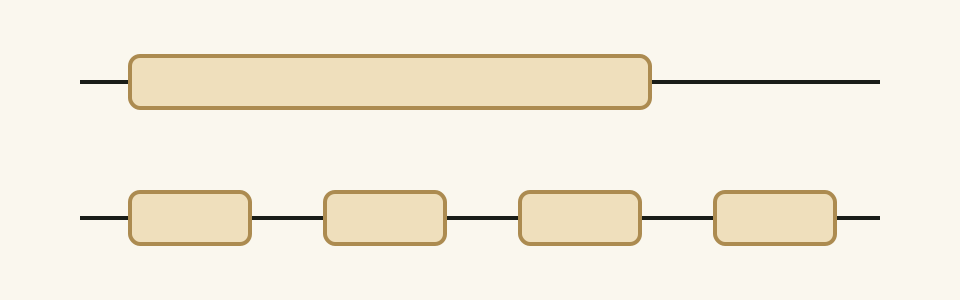 The upper part shows continuous contact at once, while the lower part shows repeated contact with intervals.
The lengths of the bars do not represent actual time or classification thresholds.
Connecting Raw Material Data to Final Product Data
The evaluation subject must be linked to the actual usage conditions.
The Ministry of Food and Drug Safety's guidance specifies that complete products should be used as test specimens in principle, and when other specimens are used, one should fully consider whether they can replace the evaluation of the complete product.
The possibility that raw materials may change physically or chemically during manufacturing and sterilization processes is also covered.
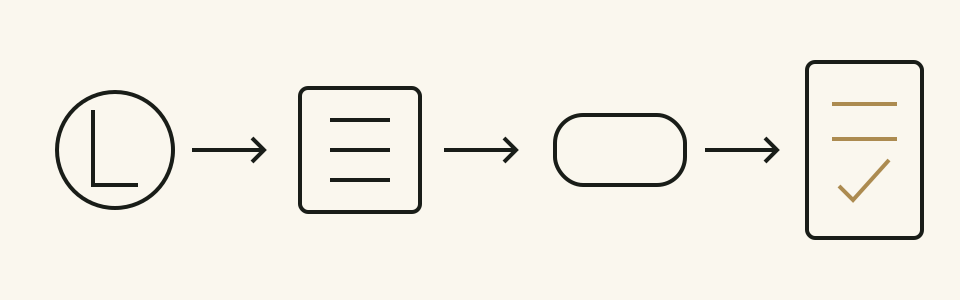 This diagram is for distinguishing between information about raw materials and final product information.
Similarly, FDA guidelines emphasize evaluating not just the materials, but also manufacturing methods, applicable sterilization, and residues of process auxiliary substances as part of the final product state.
FDA materials provide supplementary explanations of U.S. evaluation principles and do not replace domestic data submission requirements.
Therefore, to utilize the evaluation data of the virtual pad for the tube, one must first read what kind of samples were used in the tests.
Depending on whether it is raw pellets, formed components, or completed products with final processing, the scope explained by the data will differ.
Next, organize the differences in contact conditions and material specifications and review the rationale for applying them to the current product.
The feasibility of utilizing existing materials is the result of this review, and it does not simply mean repeating all tests.
Information to Pass to the Evaluation Plan
At the end of the meeting, there should be not just a line saying "silicone tube" but also the contact surfaces, contact targets, usage time, frequency of use, and final product state remaining.
By linking the materials obtained with the differences not verified, one can explain what additional reasoning needs to be reviewed.
When checking the preparation materials, the following questions may be helpful:
- Does the contact surface indicated in the drawing point to the same component as the explanation of the usage method?
- If it is skin contact, is it clear whether it is intact skin?
- If there is repeated contact, is the usage scenario documented?
- Does the existing test specimen represent the final state of the current product?
- Have you distinguished the scope explained by the data from the range needing further judgment?
Subsequently, the evaluation items and testing necessities will be determined by reviewing the current requirements in the applicable country and the risks specific to each product.
FDA's guidance on evaluation items should not be viewed as a checklist for carrying out tests as-is but should be used as guidance for the appropriate evaluation system for each product.
Sources and Scope of Application
Verification Date: 2026-10-14.
The attached documents from the Ministry of Food and Drug Safety were revised in October 2019, and the registration date of the webpage does not represent a revision date of August 2, 2023.
I have confirmed the relevant texts and tables and have not reproduced original tables or images in this article.
The guidelines do not possess legal effectiveness and neither does this article serve as a table for current testing lists or exemption criteria.
On pages 6, 9-13, and 20 of the revised version from October 2019, confirm contact conditions, finished products, and specimen principles.
2.
FDA, Basics of Biocompatibility.
Principles for reviewing contact characteristics and final product state.
3.
FDA, Biocompatibility Evaluation Endpoints by Device Category.
Distinction between evaluation systems and checklist for comprehensive tests.
Related Articles
- Sources and Evidence of Animal-Derived Collagen Materials: A separate perspective comparing raw material suppliers and sources.
- Summary of Medical Devices' Intended Use, Operating Principles, and Performance: A method for describing product usage scope before detailing contact conditions.
Let's talk
Apply what you have read
to your product.
Tell us your product's current stage and the questions you need to review.
Discuss your questions ↗