
If There Is a Calibration Certificate, Can We Inspect with That Equipment?
This article distinguishes between confirming the calibration history and the actual purposes of measurement.
It organizes questions comparing the certificate with inspection conditions using a hypothetical scenario where the usage range has changed.
Questions Remaining After the Existence of a Certificate
In the inspection room, the calibration sticker on the equipment has been confirmed.
The management ledger is linked to the certificate.
It is necessary to distinguish between what can be known up to this point and what further judgments are required to actually start product inspection.
The question addressed in this article is, after asking, "Has it been calibrated?", next is "How will we use that basis for this measurement?".
Even with the same equipment, if the usage range or purpose of inspection changes, it may be necessary to re-explain the relationship with existing data.
This does not mean that equipment must always be recalibrated or replaced.
The questions, tables, and figures below are examples created by MedQraft for measurement management meetings in medical device companies.
These do not replace approval for individual equipment use, product pass/fail judgments, uncertainty assessments, or regulatory compliance evaluations.
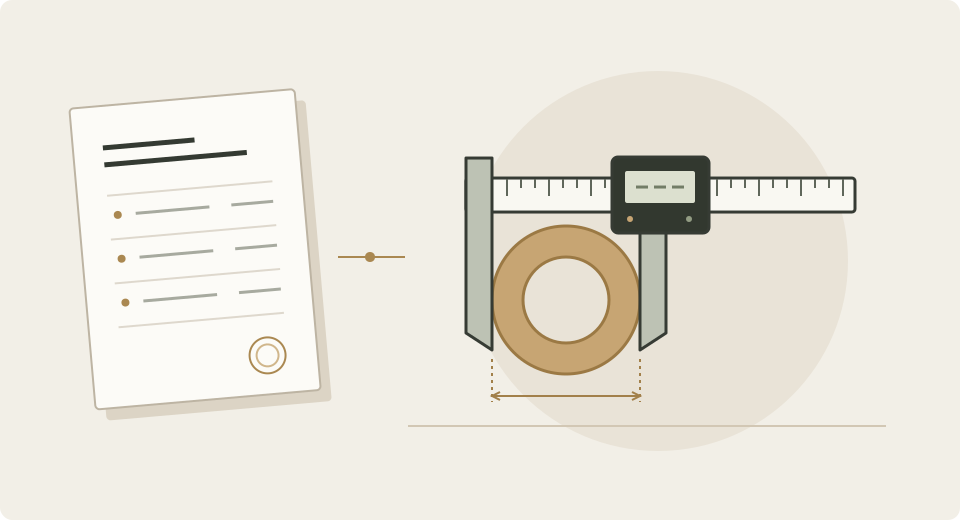 The calibration certificate and actual inspection conditions are confirmed together.
Distinguishing Between Measurement Traceability and Fitness for Purpose
NIST explains that fitness for purpose is not automatically guaranteed by measurement traceability alone, and it should also consider whether measurement uncertainty is adequate for the intended purpose.
This is why the expression of traceability should not be immediately interpreted as "sufficient for all inspections of our products".
NIST, Metrological Traceability FAQ §5.1.4
This references the metrology explanations from the U.S. NIST and does not simply translate domestic medical device statutory review standards.
No specific uncertainty ratios or equipment grades are presented as common cutoff points here.
In meetings, please explain the fact that materials exist, the results read from those materials, and how those results apply to our business.
If all three are compacted into a single square titled "Calibration Complete", it will be difficult to trace back to what has been confirmed.
This distinction can serve as a starting point for dialogue if the persons in possession of the certificate and those making inspection decisions are different.
First, Briefly Describe the Actual Measurement Tasks
Before reading the certificate, you can summarize the product name, measurement characteristics, usage range, and inspection purposes in one paragraph.
For instance, it can be at the level of “Checking specific dimensions of new parts upon arrival and intending to use a different range than previously used on existing equipment.”
Do not fill in unknown conditions; leave them as unverified.
The following table contains questions to be organized in a meeting before requesting information.
Not a list of additional trials, but a framework to see who holds which information.
| Description of Tasks | Self-Review Questions | Example of Associated Materials |
|---|---|---|
| Target and Characteristics | What product is being measured and what is being measured? | Inspection methods, drawings, or requirements |
| Usage Range | What is the actual range of use? | Inspection conditions and equipment usage records |
| Usage Composition | Does the equipment on the certificate match the actual configuration? | Equipment identification, accessory information |
| Purpose of Judgment | What decisions are made based on measurement values? | Applicable standards and review responsibilities |
The fact that the inspector knows the equipment name does not mean that all conditions are organized.
Conversely, various departments should not need to repeatedly write the same information.
If there is content in an already approved inspection method, that material can be linked, leaving questions only for unexplained parts.
Comparing the Certificate with Usage Conditions
In practical reviews, first check whether the equipment identification information on the certificate connects with the equipment in the field.
If there are several similar models, do not link materials just because the model name is the same.
Clearly identify which physical material you are reading, and review necessary information such as calibration points, results, and uncertainties together with the measurement personnel.
Instead of immediately writing “fit” next to verified items, it is more useful to explain the relationship between the actual usage conditions and the measurement.
If using outside of calibration points or calibration ranges, technical reviews may be needed to verify if existing evidence can explain.
Just because the calibration points and usage points differ does not automatically imply non-conformity.
If the expressions in the certificate are unclear, rather than making assumptions, prepare questions to ask the issuing authority or internal measurement experts.
The purpose of this article's review is to find where explanations break between the basis at the time of calibration and the methods used in the field.
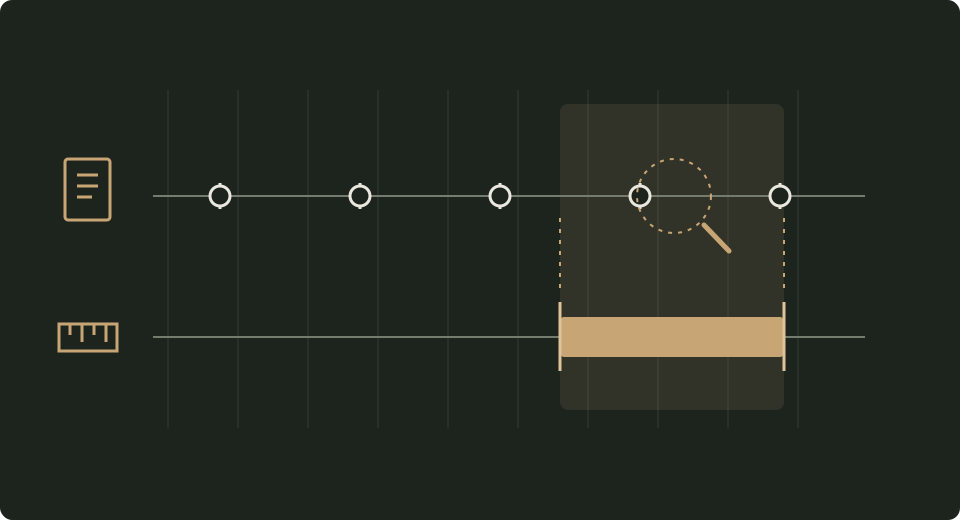 Calibrated points and actual usage ranges are compared.
Hypothetical Case: Equipment Is the Same but Usage Range Has Changed
The following is a hypothetical situation, not a real customer scenario.
A manufacturer intends to use existing dimensional measurement equipment for the inspection of new parts.
The equipment number and certificate match, but how the existing evidence applies to the range used for the new part has not yet been explained.
This situation could instead be recorded as "it can be used since the calibration date is still valid," while sharing the confirmed facts and remaining reviews.
The table below is an example of meeting notes and is not a legal format.
| Confirmed Facts | Unorganized Content | Examples of Next Reviews |
|---|---|---|
| Physical equipment number and certificate match | Relationship between new usage range and evidence | Compare calibration materials and new inspection conditions |
| Purpose of inspection for new products is organized | Required measurement level for that purpose | Discussion between the inspection responsibility and measurement personnel |
| Existing inspection methods are present | Whether applicable to the new usage | Confirm applicability of the methods |
| Additional questions remain on the list | Judgment after obtaining answers | Record evidence and conclusions by the responsible party |
Depending on review results, existing evidence may be utilized, or additional materials or evaluations may be needed.
No conclusion is predetermined here regarding which choice is correct.
It is important to not record unverified conditions as usage approval, nor to imply assessments that have not been completed as finalized.
Calibration Cycles Are Not Decided by Just Looking at the Calendar
NIST generally explains that it does not require or recommend fixed recalibration cycles applicable to all measurement equipment.
The cycle can vary based on accuracy requirements, contractual/regulatory conditions, equipment stability, and the environment.
NIST, Recommended Calibration Interval
Therefore, this article does not make suggestions such as “one year is sufficient” or “immediately extend if records are good.”
First, verify the requirements applicable to the company and existing management methods, and approach by asking what basis the responsible party needs in reviewing the cycle.
In practical meetings, share whether the schedule is registered and whether the basis for that schedule is explained.
If equipment usage methods have changed, questions can be left asking if we should also jointly review the basis for maintaining existing plans.
However, do not change already established cycles or omit external requirements based solely on this article.
Leave Usage Scope When Concluding the Review
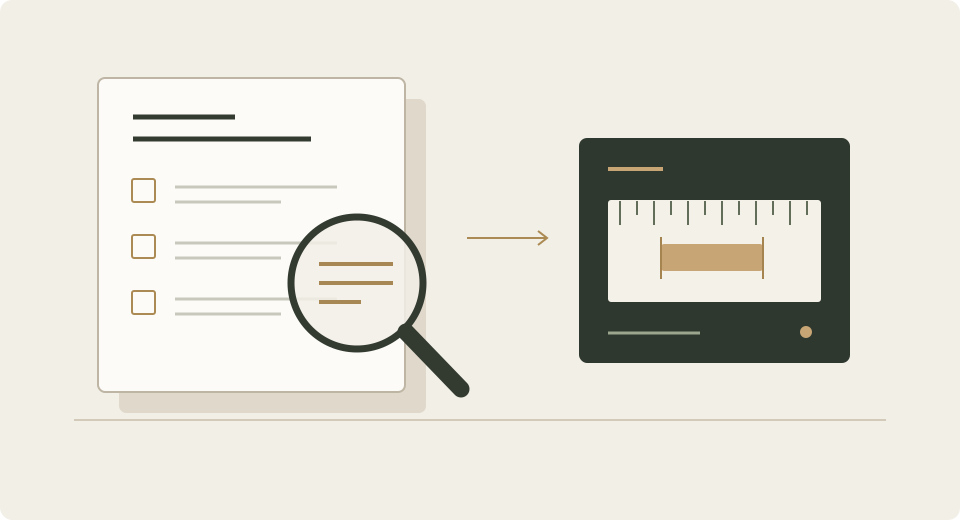 Link the reviewed evidence with the usage scope.
Good review records are more specific than simply stating "Certificate Confirmation Complete".
Ensure that which equipment's information was read, linked to what inspection purpose, and where the judgment's scope lies is recordable enough for someone else to trace back.
If the usage range has been restricted, confirm how that restriction is communicated to the actual inspector.
If there are unresolved questions, record the person responsible and the next confirmation.
However, assigning a question and receiving an answer are not the same.
When materials are replied to, review whether the content resolves existing questions, and if new questions arise, keep that status separate.
This method is not a suggestion to increase records.
It can be helpful for operations to decide where to place what kind of material among the management ledger, certificates, inspection methods, and review records without unnecessarily duplicating the same information.
Questions to Bring to the Next Equipment Review
- Can you explain the actual measurement target and usage range?
- Is it clear which material the certificate connects with?
- Have you reviewed whether the results and uncertainties connect with the actual measurement purpose?
- Is there evidence to verify the changed usage compared to the previous one?
- Are there unverified items, responsible parties, and next confirmations recorded?
- Are the usage range or restrictions communicated to the inspection personnel?
For further examination of the conditions for comparing materials, refer to Conditions to Check Before Comparing Performance Test Results, and for methods to pass on review status to others, refer to Handover Status, Evidence, and Next Actions.
Official References are the NIST Metrological Traceability FAQ and Calibration Cycle Guidance linked above.
The confirmation date is September 24, 2026, and the confirmation date does not imply the implementation date of the provisions.
The remaining questions, tables, hypothetical cases, and figures are MedQraft's self-generated practical proposals.
Let's talk
Apply what you have read
to your product.
Tell us your product's current stage and the questions you need to review.
Discuss your questions ↗