
EU Medical Device Language Requirements: Review by Country, User, and Information Type
This article compares the conditions related to professional users in Germany and Austria, categorizing language requirements and translation review by separating manuals, safety information, and screen text.
Language Requirements are Determined by the Combination of Country, User, and Information Type
When determining the language for medical devices to be supplied in the EU, it is essential first to differentiate the selling country and the intended user.
Article 10(11) of the MDR stipulates that information accompanying the device must be provided in the language specified by the member state as defined in Annex I, Section 23.
The information on the label must be easy for the intended user or patient to read and understand clearly.
[1]
This article focuses on product information for medical devices subject to the MDR.
For in vitro diagnostic devices, separate application of the IVDR and relevant national regulations is necessary.
The comparison of countries below summarizes the conditions of the stipulated clauses and does not imply that the same language applies to all products and documents.
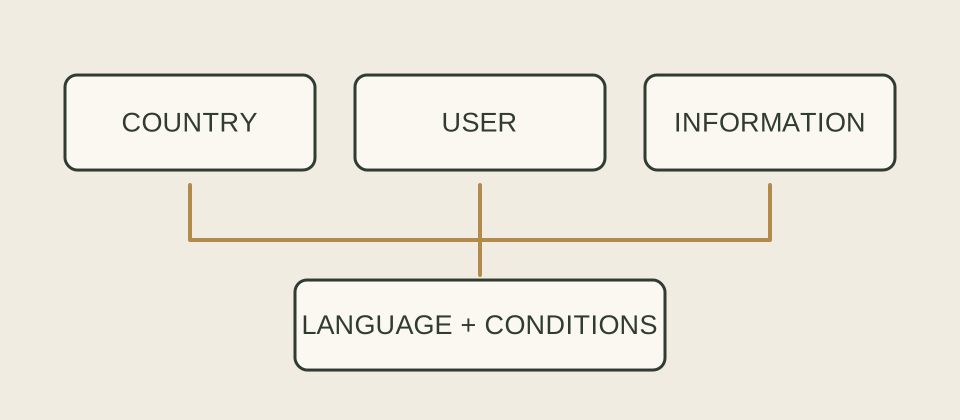 Figure 1.
In the same country, the conditions to consider vary based on the type of user and information.
Rather than recording one language as an attribute of the entire product, it is preferable to note the three conditions together.
Germany and Austria Have Different Text Regarding Professional Users
Austrian MPG 2021 §7(1) specifies German as the primary language, while allowing English for information accompanying medical devices intended for professional users only.
The current wording of this provision has been in effect since March 23, 2023.
[2]
German MPDG §8(2) also establishes German as the primary language.
However, if there is a legitimate reason, and the information is intended solely for professional users, English or other languages easily understandable by the users are permitted.
In this case, safety-related information must be provided in German or the user's language.
[3]
| Category | Austria | Germany |
|---|---|---|
| Review Clause | MPG 2021 §7(1) | MPDG §8(2) |
| Primary Language | German | German |
| Conditions Related to Professional Users | English allowed for information accompanying devices intended for professional users | Legitimate reasons allow for other languages for information intended solely for professional users, safety information conditions reviewed together |
| Practical Record | Scope of product for professional users only and evidence of application | Grounds for exception cases, scope of users, and language for safety information |
Therefore, if one were to write 'hospital use, English' for both countries in one line, conditions from the German clause may be omitted from the record.
It is necessary to distinguish the fact that the product is supplied to hospitals and who the intended users are.
If there are parts that patients read or operate directly, it is appropriate to categorize that information separately.
This serves as a practical suggestion for linking national regulations to work lists.
Manuals and Screen Text Are Kept as Separate Items
The European Commission's overview of language requirements distinguishes not only labels and user manuals but also implant cards, declarations of conformity, and safety guidance.
The GUI section of the table contains information related to the language of screens by country.
The Commission explains that while there are no specific MDR/IVDR articles that set GUI languages directly, some countries have separate legislation or rules.
[4][5]
Blank spaces in the overview table or N/A should not be immediately converted to 'no translation needed'.
Functions of the text displayed on the screen, actual users, and the basis in their respective countries must be reviewed.
This article does not define the permissible languages for the GUI in Germany and Austria.
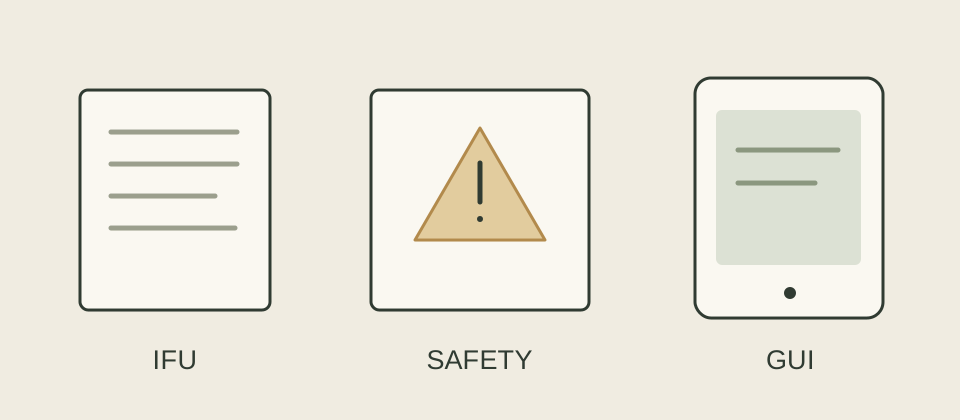 Figure 2.
Separating manuals, safety information, and screen text makes it easier to identify items that may have been overlooked in the review.
SAFETY indicates the items reviewed in this article but does not necessitate creating independent documents.
Virtual Case: Hospital Equipment Supplied to Two Countries
Let’s assume a fictitious development team is preparing a language plan for hospital equipment to be supplied in Germany and Austria.
The team has prepared English manuals, and the product screens contain setup instructions and warning texts.
As two colleagues compared lists, they discovered that the screen text was absent from the translation review targets.
This is a hypothetical situation, not based on actual products or customer cases.
At this point, the starting point for the task is not to increase the number of translation files but to identify which information is conveyed to whom.
The following table organizes this situation.
'In review' indicates neither approval nor disqualification.
| Target | Intended Reader/User | Content to Retain by Country | Next Steps in the Example |
|---|---|---|---|
| Installation/Operation Manual | Professional User | Applicable language and clause conditions | Separate Austria and Germany items to provide grounds |
| Safety-Related Text | User reading that information | Safety information language conditions and text locations | Identify target text per German §8(2) conditions |
| Setup/Warn Screens | User operating directly on the screen | National basis for GUI and user understanding review | Add text list and screen locations; language remains under review |
| Any Information for Patients | Patients or General Users | Requirements distinguishing information for professional users | Verify existence and scope of the actual item |
Translation Review Extends to the Position Where the Phrase is Used
The following procedure is not a fixed format defined by law but a work organization suggestion by MedQraft.
First, collect phrases from the current product composition that users read.
Including chapters/sections of the manual, packaging labels, and screen identification numbers makes it easier to trace where the same expressions are used.
Next, note applicable conditions and the basis clauses next to national requirements.
Rather than noting only results like 'English possible', it is better to include whether it is for professional users exclusively or if additional safety information conditions exist on the same row.
Still undecided cells should be left as 'under review', specifying grounds to consult with the responsible party.
When reviewing translations, it is essential to consider the original meaning and actual usage context.
For instance, one must check if a warning to stop operation has weakened to a mere reference note during the translation process or if units or negative expressions have changed.
It must also be confirmed that approved phrasing on screens doesn't get cut off and aligns with the action.
Such verification items are not a substitute for the necessary usability evaluations required per product but should be documented as needed.
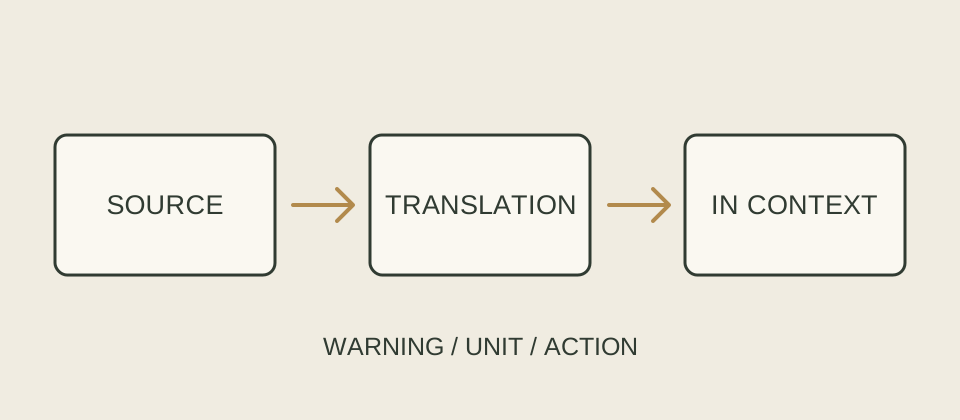 Figure 3.
After comparing the meaning of the phrases, verifying in the actual manual or screen is fundamental.
Warnings, units, and user behavior are examples of internal review items and do not present legal testing procedures.
Upon concluding the language review, one might select an item from a specific country and connect the following points to read through.
Who the information is targeting, what clause was applied, the reasons it is believed to meet conditions, and which version the files or screens will be distributed in must be articulated as a single flow.
If files are revised or user scope changes, affected items should be re-evaluated accordingly.
Basis and Scope of Verification
Verification date is October 8, 2026.
The conditions of national regulations were confirmed based on official legislation.
The Commission’s overview table was used as a starting point for identifying requirements while stating that the table itself prioritizes the MDR and member state regulations.
Internal tables, figures, and examples were used, and original tables or figures were not replicated.
Verification of Article 1 and implementation date of wording.
3.
German Official Legislation, MPDG §8.
Verification of primary language and exception conditions in Article 2.
4.
European Commission, Overview of Language Requirements for Medical Device Manufacturers.
Confirmation regarding GUI-related explanations.
5.
European Commission, MDR Language Requirement Table Rev.3, August 2025.
Referencing preface, national items, and GUI column.
Related Articles
The examination of product definitions and data differences for global expansion is covered in Preparing for Market Entry in the USA and Europe.
Usability review based on users and environments can be read in conjunction with Medical Device Usability.
Let's talk
Apply what you have read
to your product.
Tell us your product's current stage and the questions you need to review.
Discuss your questions ↗