
Can the Sample Size of ISO 2859-1 be Applied to Developmental Performance Testing?
This article distinguishes between lot acceptance sampling and the performance validation of new designs, explaining how to interpret the sample size in standards in conjunction with the scope, testing conditions, and basis for judgment.
Different Subjects Even with the Same Sample Size
When considering applying the sample size used in incoming inspection to the strength testing of a new part, it is essential first to examine whether the two tests serve the same purpose for judgment.
The inspection that determines whether to accept a delivered lot and the test that validates whether a new design meets the required performance are fundamentally different questions.
The mere fact that an existing inspection plan cites a standard number does not justify using that quantity as the basis for a different test.
This article addresses how medical device developers and quality professionals should review the sample size of a test plan.
Based on the public introduction of ISO 2859-1 and the statistical interpretation by NIST, the article distinguishes the purpose of inspections and presents a practical review sequence as suggested by MedQraft.
It does not determine the sample size or pass criteria for any specific product.
ISO 2859-1 Addresses Lot-Based Acceptance Sampling
The current published version confirmed on the ISO official page is ISO 2859-1:2026, 3rd edition.
This standard addresses a count-based inspection system for lots, using AQL (Acceptance Quality Limit) as a metric.
A crucial point to note is the inclusion of "lot-based inspection" in the standard's title.
NIST describes the process of inspecting a randomly selected sample from a lot and determining whether to accept the lot based on those results as acceptance sampling.
The primary purpose is to determine the acceptance of the lot and distinguish it from estimating the quality of the lot itself.
NIST: What is Acceptance Sampling?
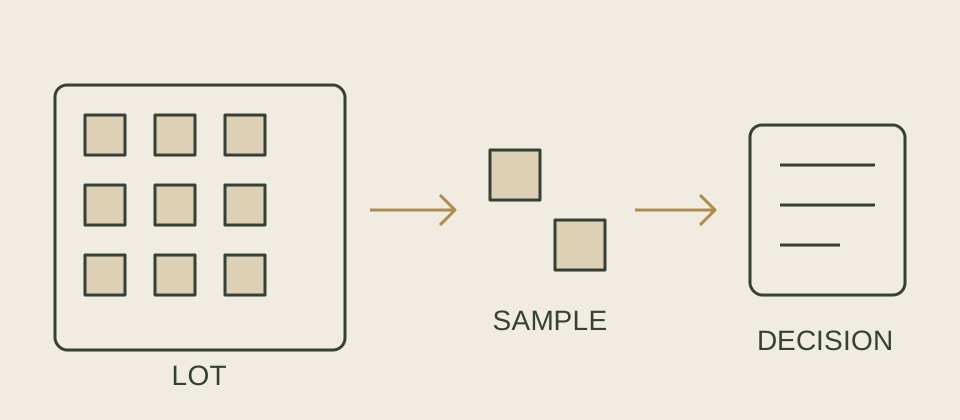
In lot inspections, the results of the samples are used in determining whether to accept that lot.
The number of shapes and ratios in the diagram are illustrative and do not represent actual sample sizes.
Do not interpret "count-based" to mean exclusive for visual inspection.
Inspection is also possible that classifies results as conforming or nonconforming to specific requirements after performance is measured.
Thus, the issues to be reviewed include not only whether strength was measured but also how the results will be used for judgment in what unit.
It is crucial to distinguish whether it is an inspection for lot acceptance or a test that draws conclusions about design performance.
Hypothetical Case: Applying Incoming Inspection Sample Size to New Parts Testing
Let's assume the development team is preparing a strength test for a new component they designed.
The person in charge merely copied the sample size from the incoming inspection plan for a similar part.
The existing plan cites ISO 2859-1 as the basis.
At this point, the explanation "we have examined with this number before" gives a source but does not provide sufficient reasoning for the strength test of the new design.
The performance intended to be verified in the new test, the applicable loads and conditions, the composition of the samples to be tested, and the interpretation of the results all need to be reviewed.
While the outcome of this review may still yield the same sample size, the mere fact that the numbers are identical does not replace this review.
| Review Items | Existing Incoming Inspection | New Design Strength Test |
|---|---|---|
| Subject of Judgment | Specific delivered lot | Test subject design and specified performance |
| Main Question | Can we accept this lot? | Does it meet the required performance under specified conditions? |
| Sample Selection | Samples within the lot according to the inspection plan | Samples with suitable composition, state, and conditions for the test objective |
| Basis for Quantity | Applicable sampling inspection plan | Conditions of the applicable test standard or separate justification |
| Result Interpretation | Judgment on lot acceptance | Performance supported by the test and the range of applicability |
The table outlines the direction of the review for the hypothetical case.
This is not a classification that forces a single method on all incoming inspections or development tests.
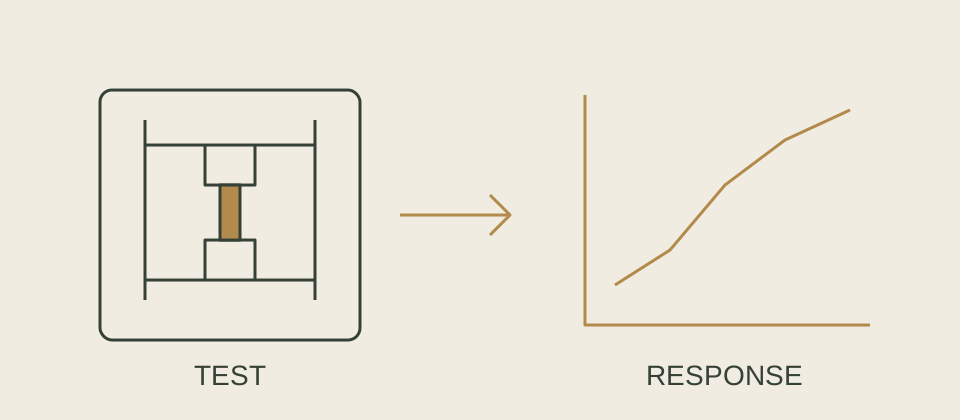
In design performance testing, it is crucial to organize what conditions will be applied to the samples and what responses will be evaluated.
The device and curve are conceptual representations and do not present actual test configurations or pass criteria.
Sample Size in Test Standards Should Be Read in Context
In practice, the first step is to confirm the number and version of the test standard intended for application and its scope.
Review whether the type of product, materials, and conditions of use fall within the scope, then read across to related topics such as sample preparation and preprocessing, test orders, and result judgments.
Focusing on just one item's sample size without considering the conditions that number presumes may lead to loss of significant understanding.
If the standard specifies the sample size for the test, it is essential to check the conditions and exceptions applicable to that quantity.
In situations where the quantity is not specified or requires a separate basis, it is more appropriate to review a estimation method that fits the conclusion intended from the test rather than simply filling in with the previous test's numbers.
NIST's interpretation of sample size explains what is being estimated, the level of precision needed, and what variability exists within the population.
While this principle cannot be applied uniformly to all tests using the same calculation formula, it helps to understand the difficulty of selecting a quantity without first defining purpose and variability.
Test Plans Should Document the Source and Purpose of Sample Sizes
The review approach suggested by MedQraft entails selecting one test item and briefly explaining the basis for its quantity.
Next to the phrase "as per the standard," document the number, version, and applicable items, linking them to the rationale for application to this product and conditions.
If separate statistical justifications are used, ensure that documentation provides insight regarding the assumptions made in reaching the conclusions.
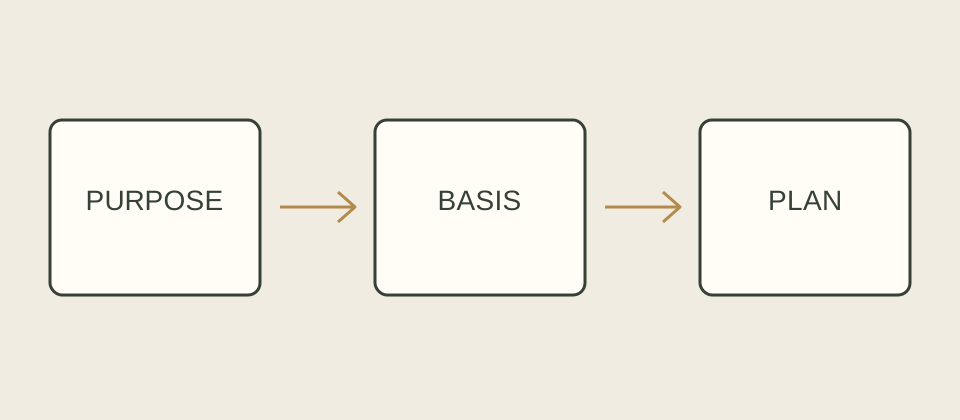
This structure connects the purpose of the test, the justification for the quantity, and the actual plan internally for review.
It does not reproduce any specific formal procedures or templates contained within regulations.
| Items to Verify in the Plan | Questions to Review |
|---|---|
| Test Purpose | What judgment is the test intended for, such as lot acceptance or design performance validation? |
| Applicable Standard | Is the number, version, and applicable items clearly defined and suitable for the product and testing conditions? |
| Sample Selection | What composition and state will the samples be tested, and what is the rationale for selecting those? |
| Sample Size | Can the designated conditions or data support the conditions specified in the standard? |
| Result Judgment | What conclusions will be drawn based on which results? |
In this case, the necessary revision is not merely increasing the existing number.
It involves aligning the justification for the existing incoming inspection quantity alongside the new test's purpose, distinguishing applicable parts and additional aspects that need determination.
The actual quantity should be decided based on the requirements for that product, the applicable standards, and the test design.
Sources and Scope of Review
- ISO 2859-1:2026 Official Introduction: Check publication version, standard name, and outline of public applicability.
- NIST, What is Acceptance Sampling?: Confirm the purpose of lot acceptance judgment.
- NIST, Selecting Sample Sizes: Verify the relationship between sample size, purpose, precision, and variability.
Review date is October 11, 2026.
The ISO paid standard document and detailed figures from the sampling table have not been reviewed or reproduced.
The tables and figures in this article are self-produced explanatory materials.
Any officially recognized editions under regulations of specific countries or contractually applicable versions must be judged separately from the current publication confirmation herein.
Related articles: Conditions to Check When Comparing Results of Medical Device Performance Tests, Linking Software Requirements and Test Evidence.
Let's talk
Apply what you have read
to your product.
Tell us your product's current stage and the questions you need to review.
Discuss your questions ↗